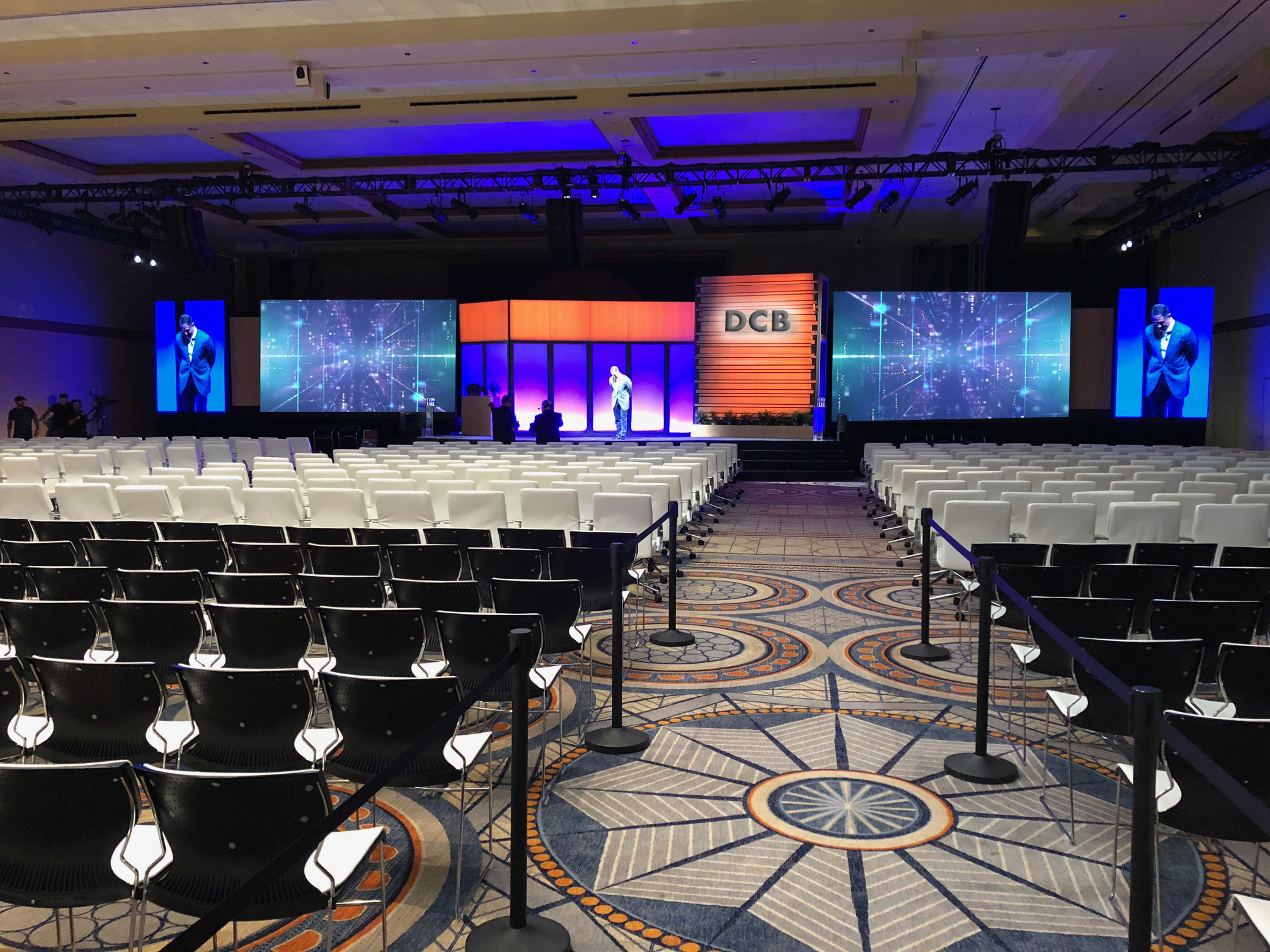
The rigging plot comes before the run of show
Every element that hangs above a general session floor, whether it is a truss carrying moving lights, an LED wall panel, or a speaker cluster, has to be mapped onto a single rigging plot before IATSE crews start flying anything. That plot accounts for weight limits at each point on the grid, and any point carrying real load typically needs a structural engineer's letter before the show's rigging supervisor will approve it.
Changing the run of show after the rigging plot is locked, such as adding a second screen or moving a presenter position, can mean reworking the entire grid rather than a simple adjustment, which is why the production team usually pushes to finalize content needs before the rigging drawings go final.
LED, lighting, and audio sharing one grid
A general session's video, lighting, and audio departments are all drawing from the same finite rigging real estate, so a request from one department, like moving a follow-spot position, can force a change in another, like where an LED tile array can hang. Coordinating those departments early avoids a scramble during load-in when a rigging point turns out to already be claimed.
Power distribution follows the same logic, since LED walls, moving lights, and line array speakers all draw from a shared power plan that has to be sized before load-in, not discovered as a shortfall once everything is plugged in.
Teleprompter and presenter-flow logistics
A keynote presenter's path from backstage to the stage mark, and the teleprompter positioning that supports their delivery, has to be planned around the same rigging and staging elements as the rest of the production. Confidence monitors and teleprompter glass both need clear sightlines that do not conflict with camera positions covering the session for overflow rooms or streaming.
Presenter walkthroughs and rehearsal time on the actual stage, rather than only a walkthrough of slides, matter more in a general session build than in almost any other event format, since a single presenter's comfort with the stage directly affects how the entire opening moment lands.
Load-in sequencing for a single keynote day
A general session often has to load in, rehearse, and be ready inside a single overnight window or a compressed day ahead of a keynote, especially when the same room needs to flip to another use afterward. That sequencing usually starts with rigging and structural elements first, then video and lighting fixtures, then audio tuning, with content and rehearsal happening last against whatever time remains.
Because the schedule is so tight, a delay in any single department, most often rigging approval or a late structural sign-off, has an outsized effect on the whole build, which is why rigging drawings and engineering letters need to be finalized well before the load-in date rather than during it.
Overflow rooms and streaming feeds
A general session that fills its primary room to capacity often relies on an overflow room fed by the same camera and audio mix as the main stage, which means the production plan has to account for a second delivery point from the start rather than as an add-on. Camera positions chosen for the main room's in-person audience also have to work for a screen-only overflow or streaming audience, which is not always the same shot.
Latency between the live stage and any streamed or overflow feed has to be tested ahead of the actual session, since even a small delay becomes obvious the moment a presenter references something happening live in the room.
Backup power and a redundant signal path for the streaming feed matter more for a general session than for almost any other event format, since a dropped keynote broadcast in front of a remote audience is far harder to recover from gracefully than a brief in-room glitch that only the physical audience notices.