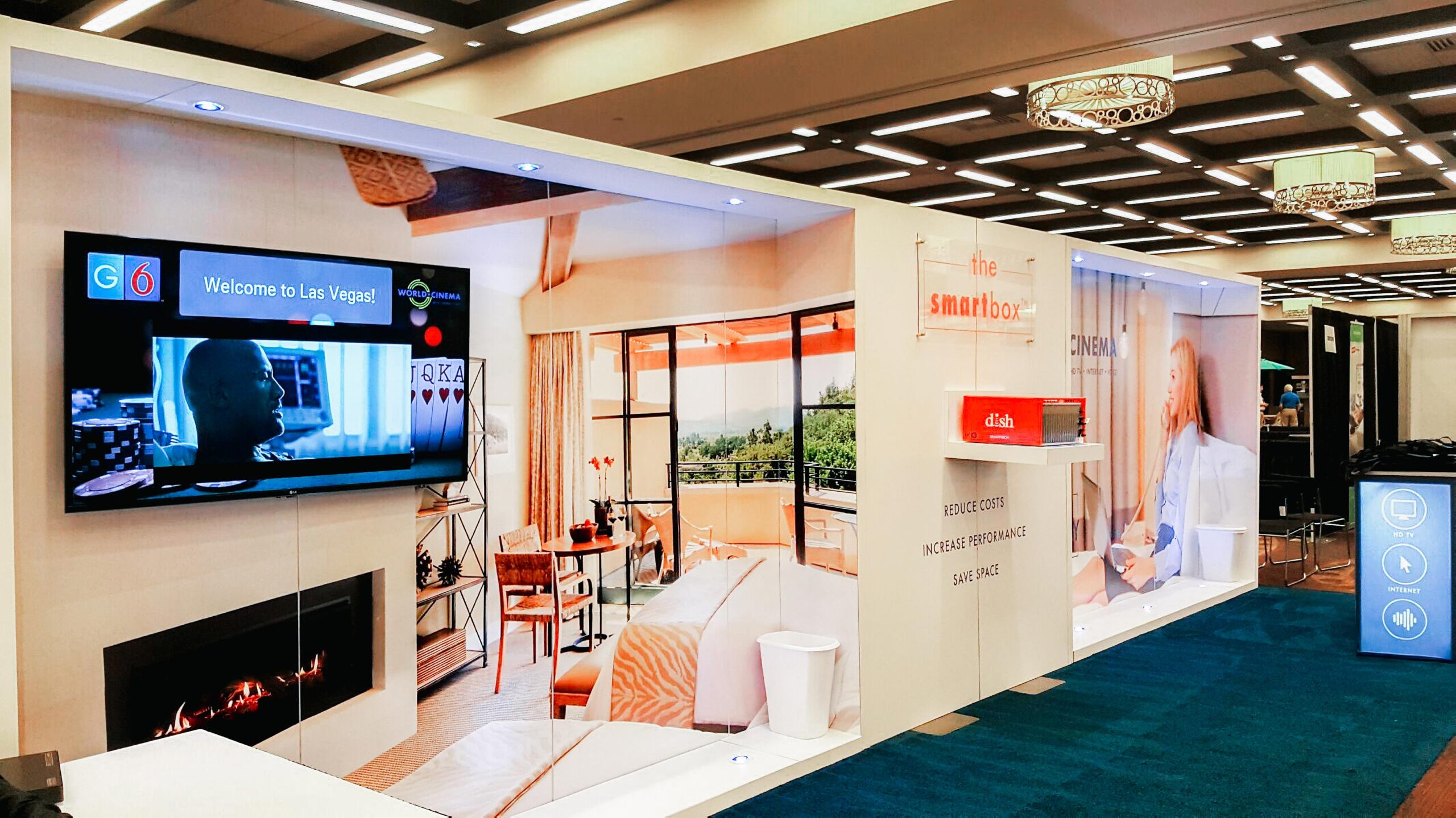
One system, several footprints
The core value of a modular system is reconfigurability: the same frame components that build a 10x10 back wall this month can extend into a 10x20 or wrap into a 20x20 island later in the year, using different panel counts and connector layouts rather than different hardware. For exhibitors running several Las Vegas shows a year at different footprints, that flexibility replaces owning multiple separate structures with one inventory that adapts.
We plan the panel and connector inventory around the largest footprint an exhibitor expects to need, so scaling up for a bigger show means adding pieces rather than starting over with new tooling.
We also document each configuration with a simple assembly diagram kept with the case set, since a modular system's advantage disappears fast if the crew rebuilding it in Las Vegas has to relearn the connector layout from scratch every time the footprint changes.
Replacement parts for a modular system also age with the product line, and we keep a supply of matching connectors and panel hardware on hand for clients running an older frame generation, since a discontinued connector style can otherwise strand an exhibitor's entire inventory. Flagging a frame generation as it nears end of support gives an exhibitor time to plan a transition rather than discovering the gap during a pre-show inventory check.
Faster assembly, same freight rules
Tool-less connectors cut real hours off on-site assembly compared to a fully custom build, since panels snap or clamp into the frame rather than requiring on-site fabrication or finish work. That speed matters most during a compressed move-in window shared by dozens of exhibitors at once, common at the Las Vegas Convention Center during its busiest weeks.
What does not change is the freight side: crated modular components still exceed the hand-carry threshold on any footprint bigger than a small inline run, so material handling still runs through Teamsters Local 631 from the marshaling yard to the booth, on the same labor call structure as a custom build of the same size.
Graphics that travel with the frame
Because the frame itself is reusable, the graphic panels become the part that changes most often between shows, and we design those panels to click into a standard connector spacing so a new print run drops straight into the existing frame without a new fabrication order. That keeps the cost of refreshing a booth's look close to the cost of printing alone.
Lighting and small AV elements typically mount to the same frame system using standard hardware, which avoids the custom brackets a fully bespoke structure would need for the same fixtures.
Where modular fits a Las Vegas calendar
Modular systems earn their keep for exhibitors returning to Las Vegas multiple times a year, at venues from Westgate Las Vegas Resort & Casino events to Convention Center shows in Primm and beyond, where the ability to resize the same investment beats rebuilding from scratch every time the show or the footprint changes.
Storage between shows
A modular system's value depends on it actually surviving storage between shows in usable condition, which means cases built for stacking and a clear inventory of which panels and connectors belong to which configuration. We label and case components by configuration rather than by show, so a team pulling the kit out of storage six months later can rebuild the right footprint without guessing which parts go together.
Off-season storage cost is also worth weighing against a fully custom build's cost of storage or disposal, since a modular system's reusability only pays off if the components are actually kept intact and accessible between Las Vegas dates rather than scattered across multiple storage units.
We also run a pre-show inventory check against the stored component list before a kit ships, since a missing connector or a damaged panel discovered on site in Las Vegas is a much harder problem to solve than the same gap found while the kit still sits in storage with time to source a replacement part.