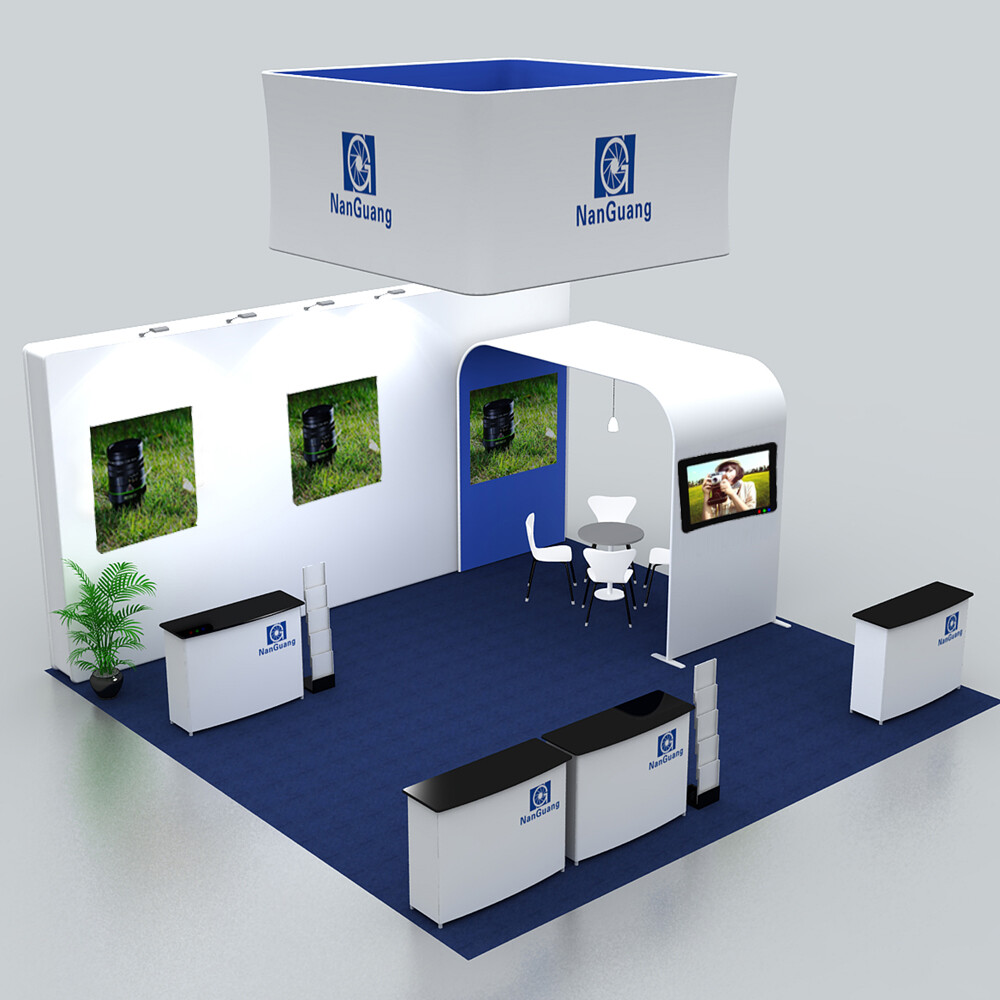
Built to fly, not to ship
The whole design premise of a portable display is that it travels as luggage instead of freight. Pop-up frames collapse into padded rolling cases, counters fold flat, and graphics roll rather than ship flat, all sized to clear standard airline checked-baggage limits so a rep can fly into Harry Reid the morning of move-in and still have a complete booth in hand. That removes the entire freight scheduling problem that larger booths have to solve weeks in advance.
We build kits around that airline math specifically, checking case weight and dimensions against current baggage rules before finalizing a design, since a kit that is a few pounds over turns into an unplanned oversize-baggage fee or a shipped crate after all.
We also weigh cases on a standard bathroom-style scale before packing is finalized rather than estimating, since airline weight limits are enforced strictly at the counter and a kit that is close to the limit on a dry run at the office can tip over once graphics and hardware are all loaded together.
Setup without a labor call
Because a portable kit is hand-carried and requires no tools, no crane, and no rigging, setup usually falls to the exhibitor's own staff without triggering the material handling rules that apply to crated freight on Convention Center and resort show floors. A two-person team can typically have a pop-up frame, graphics, and a small counter assembled in well under an hour, which matters for reps working a compressed schedule between flights.
That said, once a portable kit is packed alongside other freight or moved with a cart rather than carried individually, it can cross back into material handling territory, so we keep kits genuinely one-person-carryable rather than bundling several into a single bulk shipment that loses the exemption.
Durability for repeat travel
A display that survives one flight and one show is a different design problem than one that survives a season of back-to-back trips, and we build portable kits with hardware rated for repeated pack-and-unpack cycles rather than the lighter-duty components sometimes used in one-time displays. Graphics get mounted with attachment systems that tolerate rolling and unrolling dozens of times without cracking or delaminating.
Case latches, wheels, and corner protection matter more here than on shipped freight, since airline handling is rougher on a case than a controlled freight dock ever is.
Where portable makes the most sense
Portable kits fit best for exhibitors running a lean team through several Las Vegas dates a year, at venues from Macdonald Ranch-area hospitality events to Convention Center shows, where the cost and lead time of shipping freight for every trip does not make sense against a compact booth's actual footprint.
Protecting cases through repeated travel
Airline handling is harder on a case than a controlled freight dock, and a kit that flies to several Las Vegas shows a year needs hard-shell or reinforced-soft cases rated for that kind of repeated impact rather than a single-trip box. We also recommend basic transit insurance on higher-value kits, since a damaged frame discovered the morning of move-in leaves no time for a replacement to ship in.
TSA screening can also flag certain frame hardware or battery-powered lighting components, and we document what is inside each case so a rep can explain contents quickly at a checkpoint rather than losing time to an unexpected secondary inspection.
We also build a simple packing checklist into every kit so a rep working alone in a hotel room the night before a Convention Center move-in can confirm every component made the trip, since a portable kit's whole advantage disappears the moment a missing panel forces an emergency print order in an unfamiliar city.
Where a company runs the same portable kit across multiple reps and regions, we number each case set and track which one traveled to which show, so a hardware issue can be traced back to wear and handling rather than treated as a mystery each time it comes up.