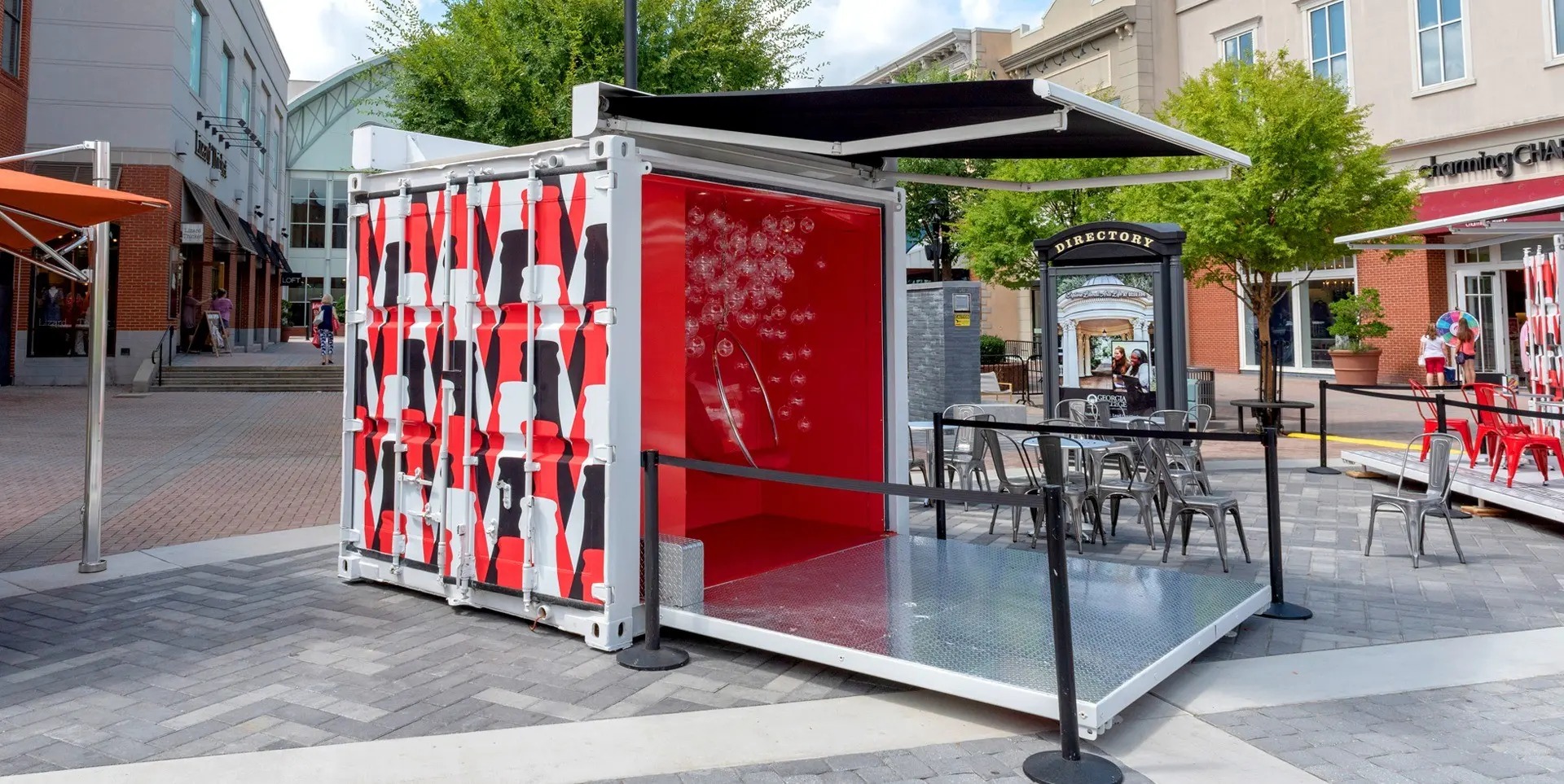
Same-day builds still need a permit check
A pop-up structure built on public-facing property, whether that is a parking lot, a Strip-adjacent lot, or an off-property retail space, typically needs a temporary use or structure permit from either Clark County or the City of Las Vegas, and which jurisdiction applies depends entirely on the exact address. That permit process runs on its own timeline and does not compress just because the event itself only runs a few hours.
Fire marshal sign-off for a temporary structure also applies regardless of duration, covering occupancy limits, emergency egress, and anchoring, which means a pop-up team has to submit the same category of paperwork a longer-running exhibit would, just on a tighter internal deadline to match the event date.
Hand-carry versus truck freight for a short run
A pop-up built from lightweight, hand-carried elements can move faster and cheaper than one requiring truck freight, since it can potentially skip the marshaling yard and drayage line entirely. Once the build needs anything crated or requiring a forklift, though, it falls under the same Teamsters Local 631 material handling process as a multi-day exhibit, regardless of how short the event itself runs.
That distinction often determines the entire design approach for a pop-up from the start, since a team planning a same-day footprint has strong incentive to keep the build within hand-carry limits if the venue and design allow it.
Staffing a one-day footprint
A pop-up typically runs on a smaller, more concentrated staff than a multi-day exhibit, since there is no need to rotate crews across several days. That said, the compressed timeline means the staff on hand has to be ready to handle setup, live operation, and strike all within the same shift, which puts a premium on a team that can move quickly between roles.
Because a pop-up often has no second day to fix a staffing gap, backup coverage for key roles matters more here than for a longer-running program where a missed shift can be absorbed the next day.
Striking fast without losing the next city's gear
A pop-up built for a touring or repeatable program needs its strike sequence planned as carefully as its build, since gear that is damaged or mispacked during a rushed teardown can show up broken at the next stop. Packing lists and case labeling matter more for a fast-strike pop-up than for a static exhibit that only gets packed up once at the end of a run.
Scheduling enough labor for the strike itself, in addition to the build, is a common oversight, since a same-day event's crew is often released once doors close, leaving too few hands to break down and load out cleanly within whatever dock access window remains.
Weather and outdoor contingency
A pop-up built outdoors, even briefly, has to account for Las Vegas heat during much of the year, and a shade or cooling plan is not optional once temperatures climb past what makes an unshaded structure unsafe for staff or guests standing in it for hours. Wind is a factor too, particularly for anything with a large graphic surface acting like a sail.
A same-day outdoor pop-up rarely has a true backup indoor location, so contingency planning usually focuses on structural anchoring and staff safety protocols rather than a full relocation plan, since moving an entire build within the same day is almost never realistic.
Hydration and shade for the crew itself, in addition to guests, tends to get overlooked in the rush to finish a same-day build, even though a Las Vegas afternoon load-in in the warmer months can be as demanding on labor as any overnight rigging call.
A pop-up team that works Las Vegas regularly usually keeps a standing checklist of permit contacts and typical review turnaround for both Clark County and City of Las Vegas addresses, since the two jurisdictions do not share a single process and confusing them late in planning can cost days a same-day event does not have to spare.