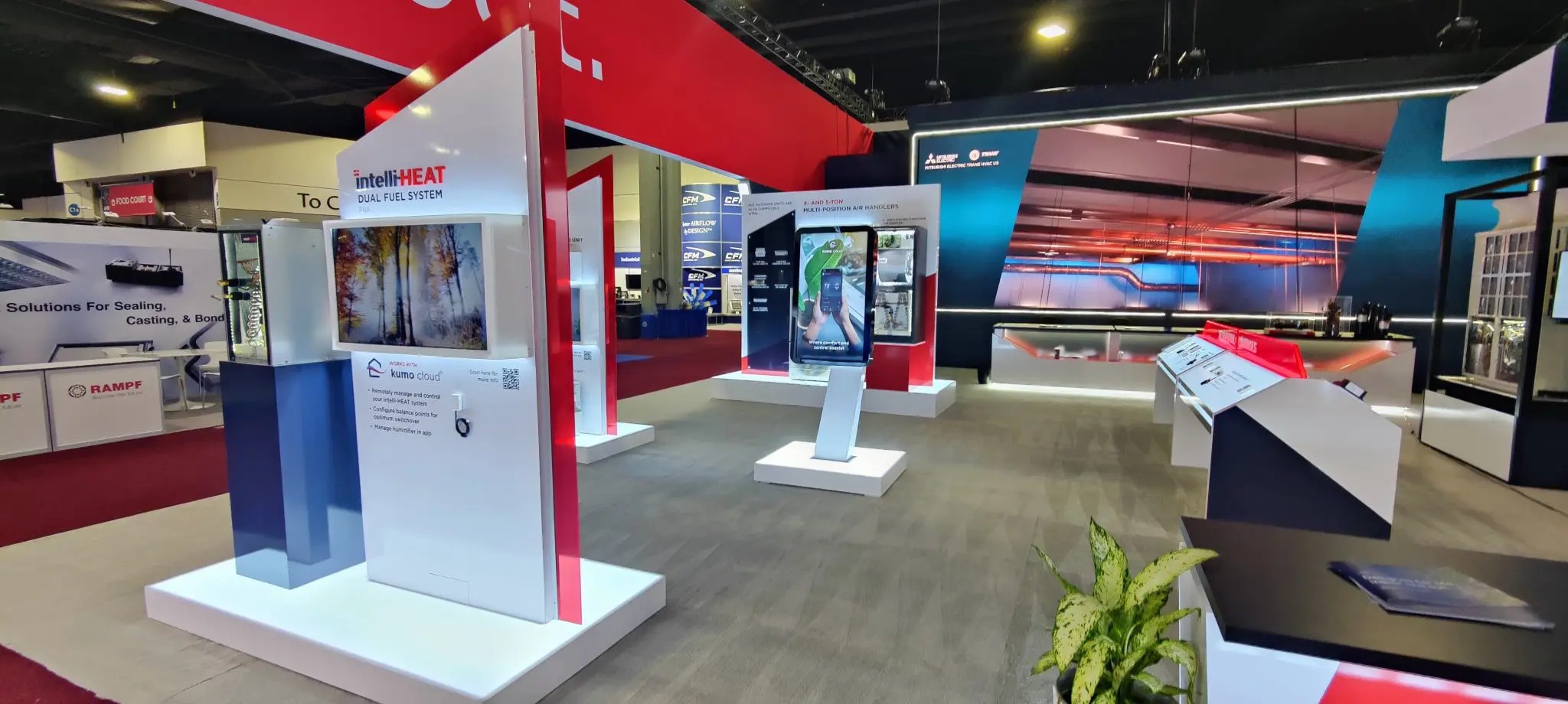
Two technologies, one problem
Backlit fabric and LED video walls both exist to beat ambient light. A backlit panel is a printed fabric graphic lit evenly from behind by an internal LED array, which gives a flat, poster-like image with real depth and color saturation even under bright hall lighting. An LED video wall is built from individual tiles, drawing its own light rather than reflecting room light, which makes it the right call when the content needs to move, loop, or change between show days.
We size the choice to the booth, not the trend: a static brand statement on a back wall usually calls for backlit fabric, while a rotating product demo or a live feed calls for tile.
Power planning before the electrical order goes in
A backlit panel's light box draws modest, predictable power and usually fits inside a booth's standard electrical drop. An LED video wall's draw scales with tile count and resolution, and undersizing the circuit order is the single most common reason a wall goes dark mid-show. We calculate the full wattage before the electrical order is filed with the venue, not after the wall arrives on site, because a late upsize request during a busy move-in week at Resorts World or the Convention Center can miss the schedule entirely.
Both technologies also need heat considered: a wall of LED tiles running for eight hours a day generates real heat inside a booth, and we plan airflow around it rather than sealing it into a tight custom structure.
Content that survives the venue
Backlit fabric is fixed once printed, so the graphic has to be right the first time, proofed at full scale rather than approved from a small screen. An LED wall's content can change hall to hall or day to day, which makes it useful for exhibitors running the same booth across multiple Las Vegas dates with different messaging for each audience.
We build LED content in a format that matches the actual tile grid rather than a generic aspect ratio, so nothing gets cropped or stretched when it loads onto the wall on site.
Where each belongs on the floor
A backlit panel earns its place as a back wall or a hanging sign that has to look sharp for the full run of a show without any operator attention. An LED wall earns its place where content needs to change, a demo needs motion, or the booth sits somewhere bright enough, like the newer halls, that a printed graphic would look flat by comparison.
Planning for a failure mid-show
An LED tile or a section of a backlit light box can fail mid-show, and the difference between a five-minute fix and a dark wall for the rest of the day usually comes down to whether spare components traveled with the booth. We keep spare tiles or light-box modules on hand for any wall large enough that a single failed component would be visibly obvious from the aisle, rather than relying on a same-day repair order from a local vendor during a busy show week.
We also test the full wall or panel under actual show power rather than a bench test alone before it ships, since a voltage mismatch between a booth's electrical drop and the wall's power supply is a common cause of a dead section on move-in morning.
A technician on call for the run of the show is worth budgeting for any wall large enough to anchor a booth's whole identity, since a repair that takes ten minutes with the right spare part on hand can otherwise mean hours of downtime waiting on a part shipped in from outside Las Vegas.