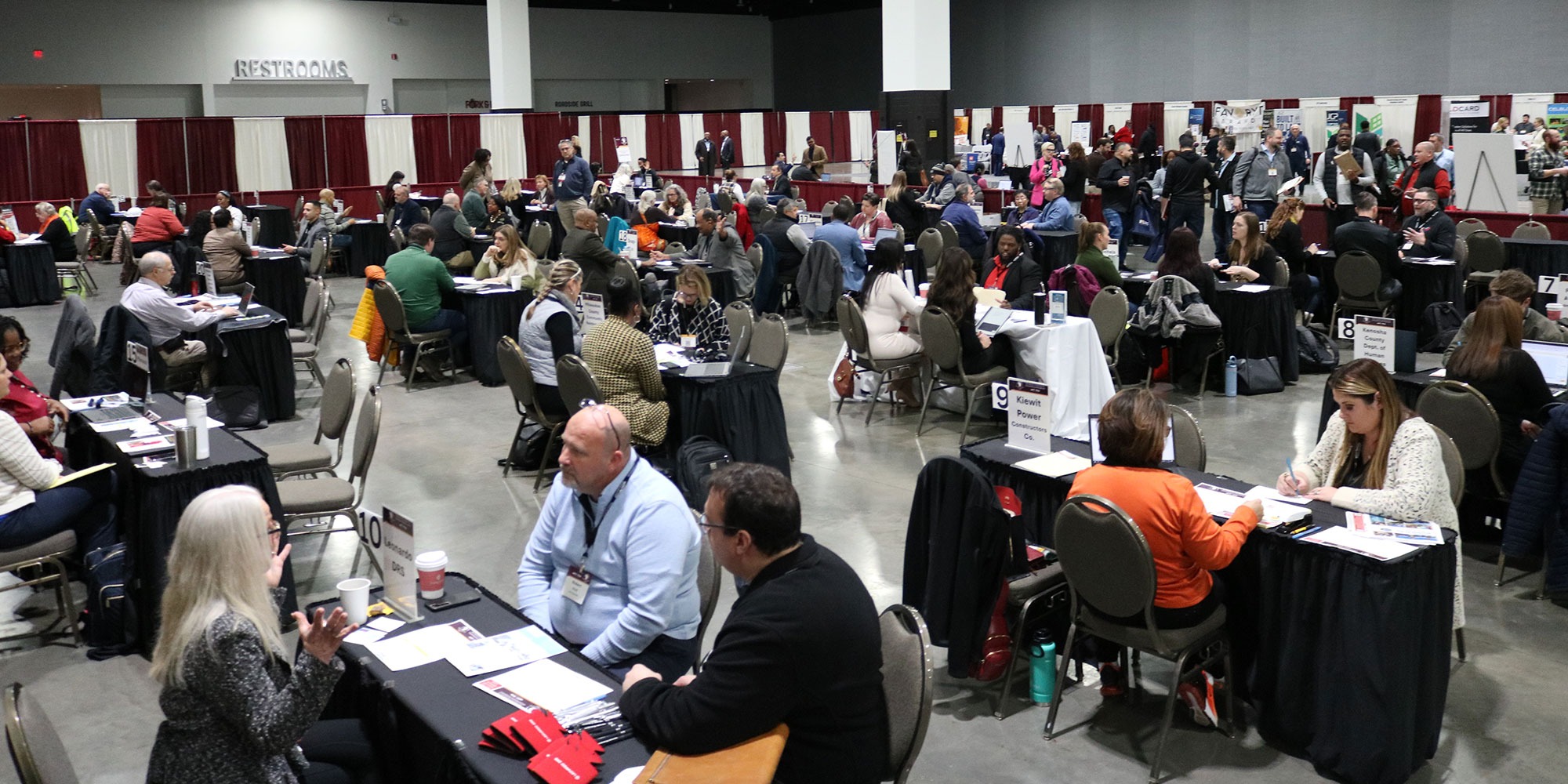
A ballroom program is not a booth program
A corporate event is judged by a single room's experience rather than a floor plan full of competing booths, which shifts the planning focus toward staging, lighting, and branding a space the audience will sit in for hours rather than walk past in seconds. Set design decisions carry more weight per dollar spent because the entire audience sees the same room from the same seats.
Because the audience is known and controlled, a corporate program can plan seating, dietary needs, and session flow with a precision a public trade show floor never has, which changes vendor conversations from capacity planning to guest experience.
Working the house labor call instead of show labor
A ballroom program on Strip property runs through the resort's own banquet and AV labor rather than the show's general contractor and Teamsters crew, even though many of the same union jurisdictions still apply behind the scenes for larger builds. The scheduling conversation happens with the property's conference services and catering teams rather than a show floor labor desk.
That house labor call is usually sized to the single event rather than a multi-day show, which can make scheduling faster but also means less flexibility if the program's needs change close to the date, since the property is balancing that labor pool against every other event on its calendar the same week.
Branding a rented room without owning the venue
A corporate event has to layer its own brand identity onto a space it does not control long-term, which usually means temporary wall wraps, projection mapping, or drape systems rather than permanent alterations to the room. Coordinating with the property's engineering team on what can and cannot be attached to walls or ceilings avoids a last-minute redesign.
Lighting is often the fastest way to reshape a generic ballroom into something that reads as branded, since color washes and gobo projections can transform a room's feel without touching a single wall.
Group logistics away from the show floor
A corporate program frequently includes transportation, whether shuttling a group from the airport, between resort towers, or to an off-property dinner, and that logistics layer has nothing to do with show floor drayage but takes just as much coordination. Group transportation timing has to account for Strip traffic patterns and event ingress at whichever property is hosting.
Dine-arounds and off-site excursions add another layer of vendor coordination outside the meeting space itself, and those bookings often need to be locked in months ahead during peak convention season when restaurant and venue availability across the Strip tightens considerably.
Rehearsal time on a private stage
Because a corporate event usually has a single fixed presentation window rather than a full day of open floor time, rehearsal access to the actual ballroom stage matters more than it might for a larger public event with more schedule flexibility. Presenters, often company executives rather than professional speakers, typically need more coaching time on stage presence and pacing than a seasoned trade show presenter would.
Rehearsal scheduling has to work around the property's own banquet turnover, since the same ballroom may host another event the night before or the morning after, leaving a narrow window to walk through content on the actual stage rather than in a generic meeting room.
A dry run with the full run of show, cues, transitions, and timing included, tends to reveal problems a script read-through never catches, which is why producers push to protect that rehearsal slot even when a client's schedule is packed in the days leading up to the program.
A corporate program planning its stage rehearsal on Strip property should also confirm which entrance the presenter and any support staff will use during off-hours, since ballroom back-of-house corridors on a large resort are not always staffed or unlocked outside standard event hours.